Life Could Be A Dream: The Debut Film Rewriting What an Australian Love Story Looks Like
What happens when the fairytale runs out? Life Could Be A Dream is a gorgeous Australian debut about romantic illusions, a mother-son relationship, and an Aussie summer that changes everything. Read our full film review guide and find out where to watch in cinemas.

good.film
5 months ago

Share

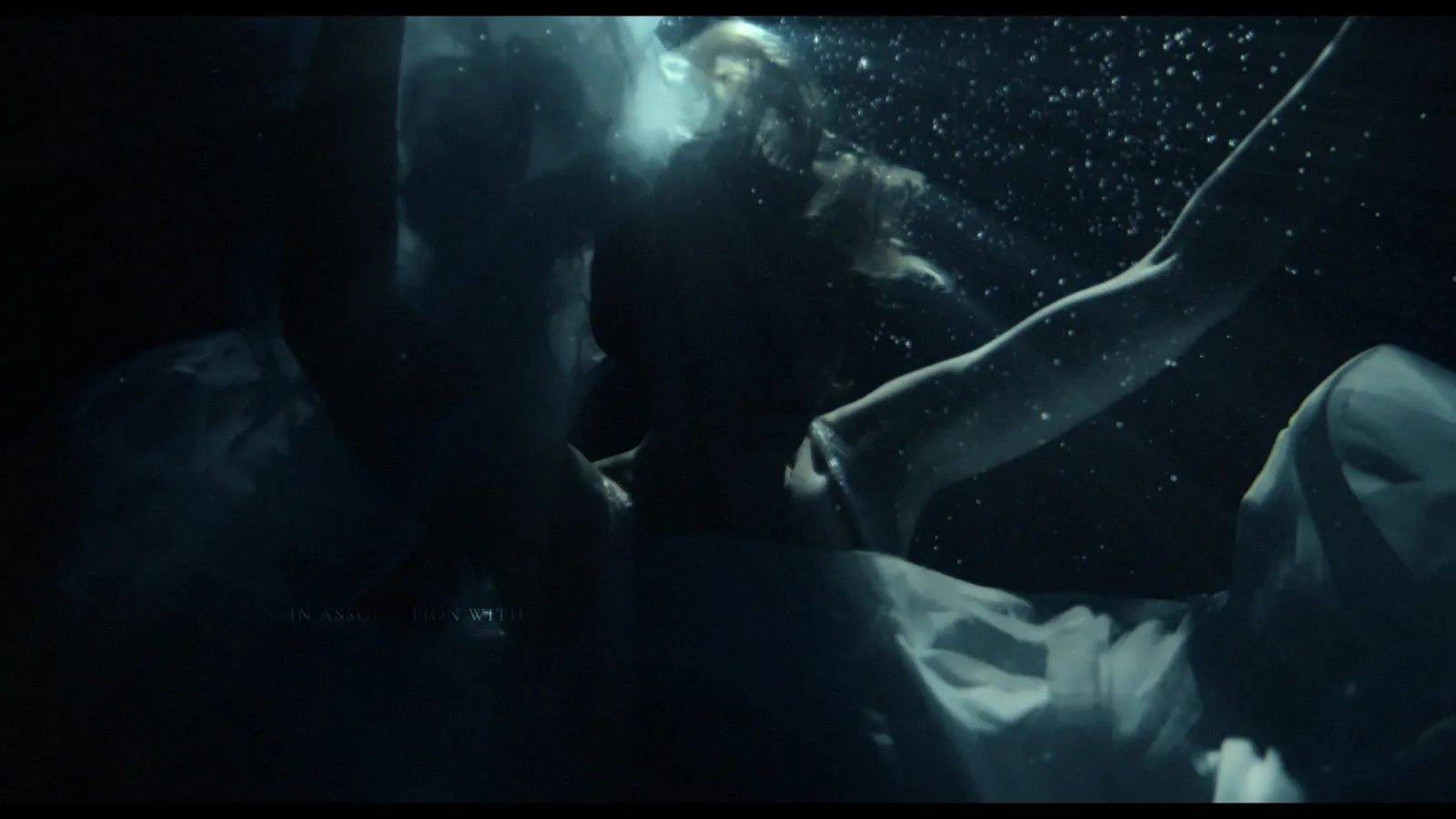
Life Could Be A Dream opens with a wedding dress. Opening credits drift onto the screen as we alternate between two shots: a woman underwater, struggling and sinking under the weight of white silk, lace and organza. Then the same woman, laughing and dancing in the arms of her husband, surrounded by wedding guests.
It's a straightforward metaphor that sets the emotional undertow of Life Could Be A Dream, and launches us straight into the film's narrative.
Sarah (Maeve Dermody) sits up from her reverie in a designer bathtub, calling out to her son: "Can you turn that off now darling?". Her teenaged son, Otis (Sonny McGee) is watching his parents' old wedding videos on his phone. He smiles at a clip of his gorgeous Dad, Jake (Alexander England) who completes the couple’s wedding dance with a kiss: "Give it up for my beautiful wife!". But for Sarah, the memory continues: "You should have practiced last night" memory-Jake whispers to her. "I can't believe you got it all wrong." Sarah wipes steam from the bathroom mirror, staring at her reflection.
This short opening scene, about an illusionary 'perfect' romance, reflection and motherhood, sets the stage for a gorgeous, thought-provoking Australian film.

The Lowdown on Life Could Be A Dream
What's Life Could Be A Dream about? At forty, Sarah Smilie is forced to confront a painful truth: she is trapped in a marriage held together by the faded illusions of love. As her thirteen-year-old son begins to navigate the turbulence of adolescence, the dangers of her marriage become impossible to ignore. Seeking refuge, Sarah relocates to a mansion she has been tasked with selling, a place suspended between the present and the past.
Who directed Life Could Be A Dream? Jasmin Tarasin.
Who stars in Life Could Be A Dream? Maeve Dermody, Sonny McGee, Alexander England, Noam Sen-Gupta
Where can I see Life Could Be A Dream? In cinemas May 14th. Find the full list of screenings here.
Who’s the team behind Life Could Be A Dream?
Life Could Be A Dream is the debut feature from director Jasmin Tarasin, and it's the kind of film that makes you want to see it again as soon as you leave the cinema. It's a layered and deceptively simple story about a mother and son spending a few summer days in a glamorous empty mansion that Sarah is trying to sell for a client.
But it's really about an inner journey. There's no first-person narration here: instead, Tarasin takes viewers inside Sarah's world through the dreamlike use of memories and metaphors.

The film is beautifully crafted, and the majority of the creative team are women: the choices of writer Courtney Collins, cinematographer Meg White and editor Gabriella Muir are central to the vision, supported by a powerhouse collective of designers, casting crew, producers and EPs. There's also a sense of purpose behind the film; the urge to tell a 'behind-closed-doors' story in a way that feels real.
“After watching this film, I hope audiences sit with a quieter question of what freedom looks like in my own life - and is that enough?”
Jasmin Tarasin, Director
How does the film engage with archetypal ideas of romance?
At the heart of the film is a simple but radical question. Does Sarah continue pretending that her relationship is romantic, or turn to look things in the eye?
A series of flashbacks act as the film's inflection points as Sarah gradually makes her decision: Jake, taking the phone from Sarah to chat charmingly to her mother, but hanging up before Sarah can continue the call. He compliments her, but asks who she's dressing up for. Starts kissing her, persuading her to skip her best friend's birthday. This urge to control Sarah clearly stems from Jake's own insecurities, and she seems to sense this. To reassure him, Sarah lets him get his way: simultaneously telling herself that his neediness is romantic, and that her own sacrifice is an act of love.
Other relationship flashbacks in Life Could Be A Dream are more ethereal than literal. These use cinematic language - a gauzy glow with soft backlighting and diffusion - to hint at the classic romance movies that have shaped our love illusions.
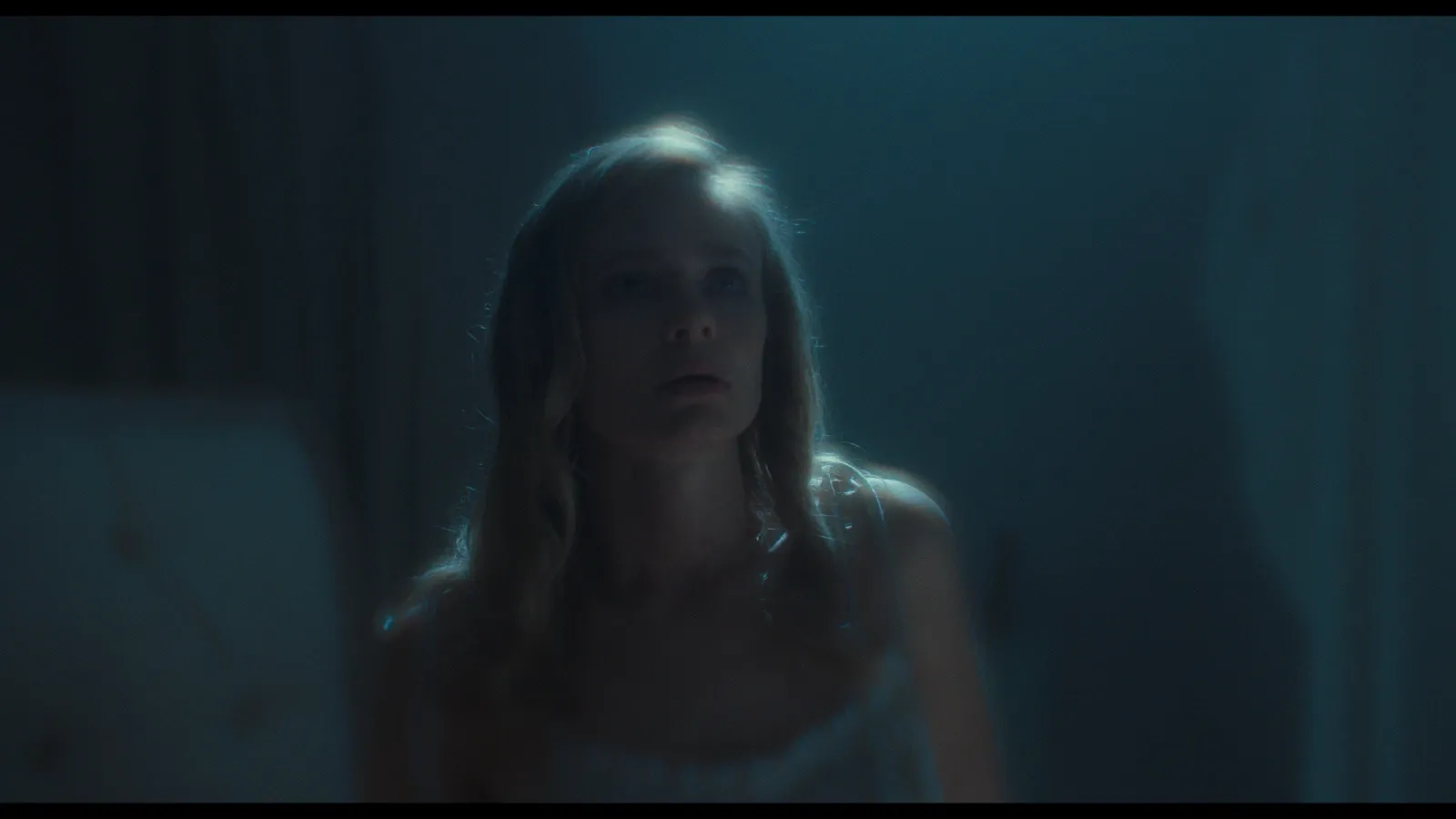
In one romance-hazed dream scene, Sarah comes to a realisation: "You're not Mr Darcy" she tells a linen-shirted Jake, before awakening to the much harsher lighting of her real world. Her silken Victorian nightgown has been replaced by her old, frayed t-shirt.
How does Life Could Be A Dream reference Pride and Prejudice?
It's clear that Sarah is a Jane Austen fan: we see a closeup of Pride and Prejudice on her bedside table, after a dreamlike sequence where Jake quotes the novel's protagonist Mr Darcy: "I have been a selfish being all my life, in practice, though not in principle. As a child I was taught what was right, but I was not taught to correct my temper." This passage comes from a section of Austen's novel where the rude, standoffish Mr Darcy is 'humbled' by his love for Elizabeth and becomes a changed man.
This romantic archetype — a misunderstood, troubled man revealed to be secretly good, and a smart, compassionate woman who ‘unlocks’ his true, repentant self — is an ideal that Sarah uses to justify Jake's behaviour. Even when he's being blatantly cruel, she seems to understand that he's hurting, and responds with empathy.
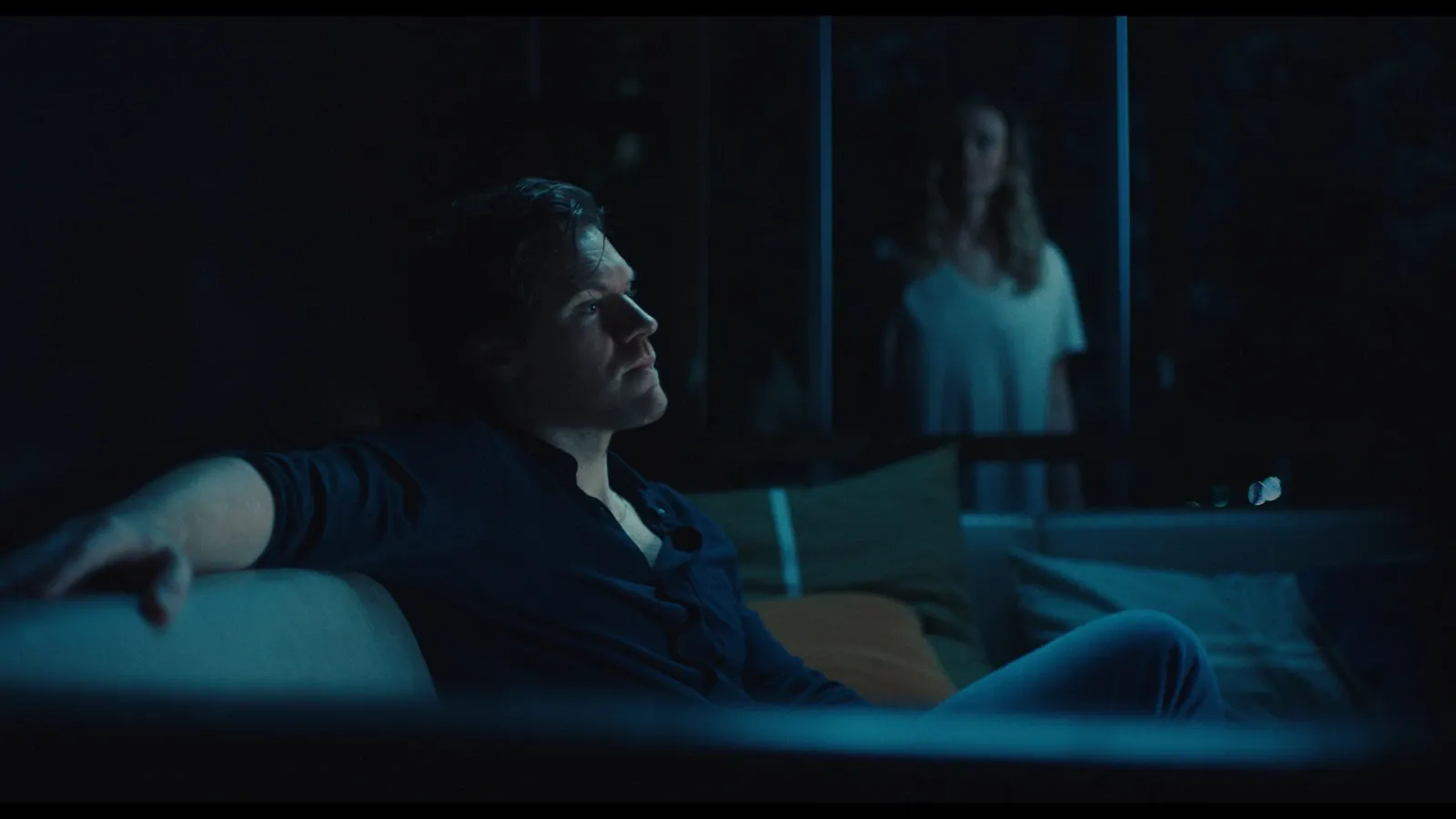
In this way, Sarah is shown to be complicit in the relationship dynamic, but the film doesn't blame her. Instead, this framing is used to empower Sarah as she painfully lets go of her illusions, and begins to put herself and her child first. There's a scene towards the end of the film where Jake calls, sobbing: "You're my family!" he says "And you can't just…" Sarah, with eyes on her son, hangs up.
How does Life Could Be A Dream address coercive control?
Firstly, it’s important to note that Life Could Be A Dream is one woman’s story - and it’s not one that we immediately associate with people experiencing coercive control. The poolside lazing and opulent mansion setting makes this explicit: we're watching a highly educated, upper-middle class white woman navigate a broken relationship.

Sarah has a safe place to go, speaks perfect English, can drive, does not experience racism, and has a litany of other factors working in her favour. But despite this, she has spent over a decade experiencing coercive control. The film is insistent: this can, and does, happen to anyone. So while on-the-ground support services are vital for women escaping family violence, we also need cultural change.
“When I made this film, I wasn’t thinking about the audiences already deeply engaged in this space. The advocates, researchers and frontline workers doing extraordinary work. I was thinking about the person watching from the couch who does not yet have the language for what they are experiencing.”
Jasmin Tarasin, Director
Tarasin is clear: her interest is in cutting through the archetypes that allow controlling behaviour to be misidentified:
“The stories we inherit about love shape us long before any crisis arrives. The perfect partner. The perfect marriage. The fairytale we’re handed as children and spend years trying to live inside.”
In Sarah’s story, it’s the looming adolescence of her son that forces her to finally confront this ‘fractured fairytale’.
How does the film deal with raising boys?
Despite an undercurrent of anxiety and grief, Life Could Be A Dream is dreamy and bright. In part, this is thanks to Sarah's teenaged son Otis. He's on the cusp of a transition from boyhood to manhood, but instead of showing Otis as a risk to be mitigated, the film presents his coming-of-age story as an opportunity.

Otis is kind, thoughtful and funny. His relationship with his Mum is loving and cheeky, and he soon develops a crush on Sati (Noam Sen-Gupta) who works at the local grocery store. His interactions with Sati and his Mum throw Jake into sharp contrast: Otis shows none of the same manipulative behaviour, in part because he seems secure in himself. He checks out girls at the beach, but he also happily cleans windows and even whips up a pavlova for Christmas.

Sometimes, Otis seems almost too perfect: in one scene, he cheerfully pawns a cherished gold necklace his Dad gave him in order to buy groceries. But this inherent goodness serves the film. There's been a growing conversation around parenting in an age of the 'manosphere'. While the concern is justified, this social anxiety also runs the risk of inferring to boys that they are problems to be managed. Life Could Be A Dream is more generous: when it comes to breaking cycles of family violence, young men are portrayed with a sense of hope. By presenting Otis as the film's quiet hero, Life Could Be A Dream offers a new archetype of what’s possible for men.
How does Life Could Be A Dream use visual metaphor?
Metaphors play a heavy role in the film, weaving the key themes of dreams, illusions and fantasies into Sarah's emotional arc. Some evoke the senses, giving the film an 'embodied' feeling — like when Sarah asks Otis to bury her at the beach, and cracks form in the sand when she breathes.

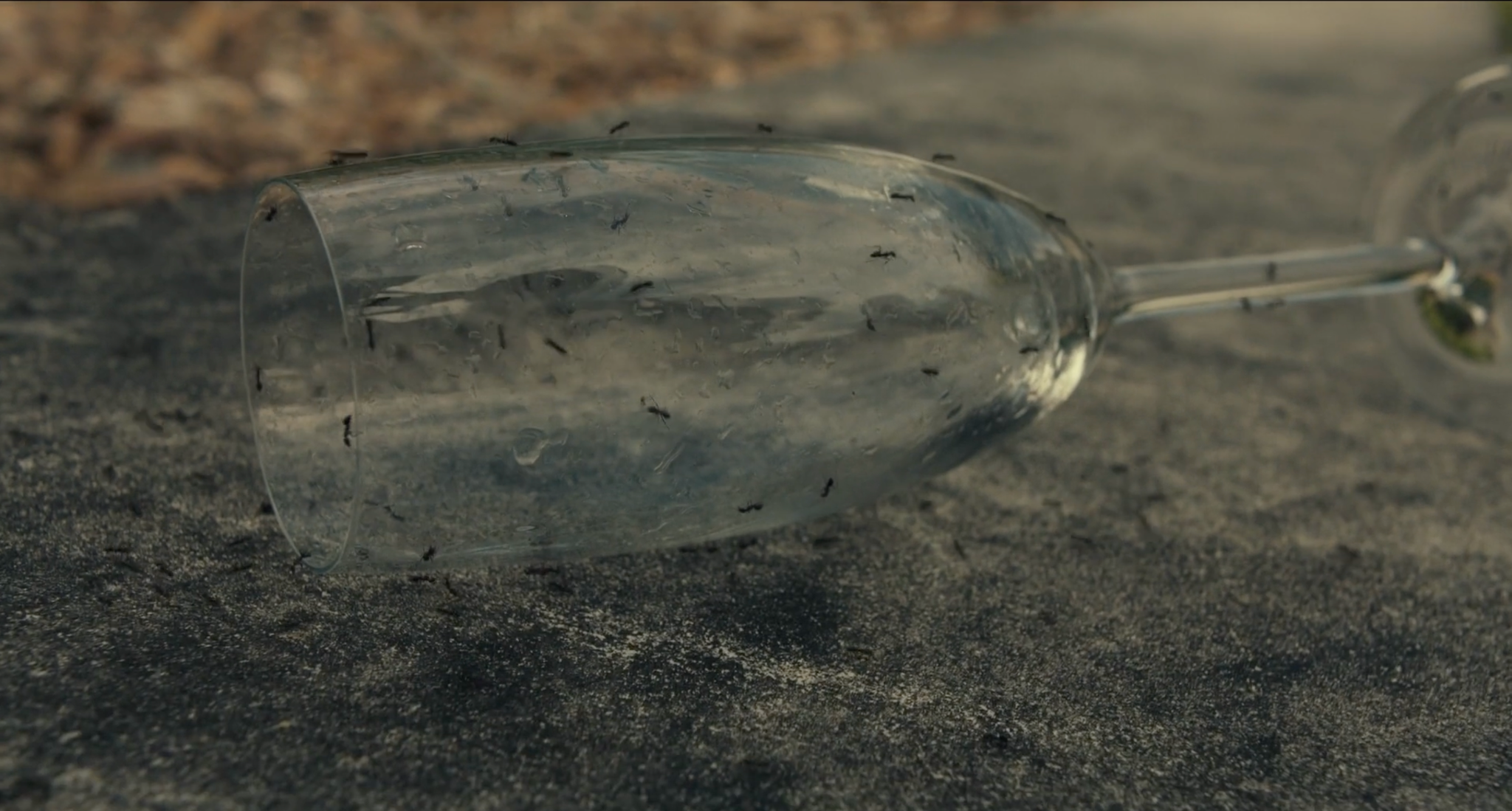
Other visual metaphors give the film layered meanings. Towards the end of the film, there's a sequence that lasts for just a few seconds: the two teens dancing under the sprinkler on a hot Christmas afternoon, while ants crawl over half-eaten cherries and an empty champagne glass.
At first glance the mangled cherries and overturned glass represent a broken illusion, the ants symbolising decay. But there’s no sense of loss: the soundtrack is pulsing and upbeat, with joyful humming. The music forces you to see the images differently. Yes, it's a scene that’s messy, sticky and imperfect, but the ants are also full of life; an unstoppable force finding sweetness in the small things.
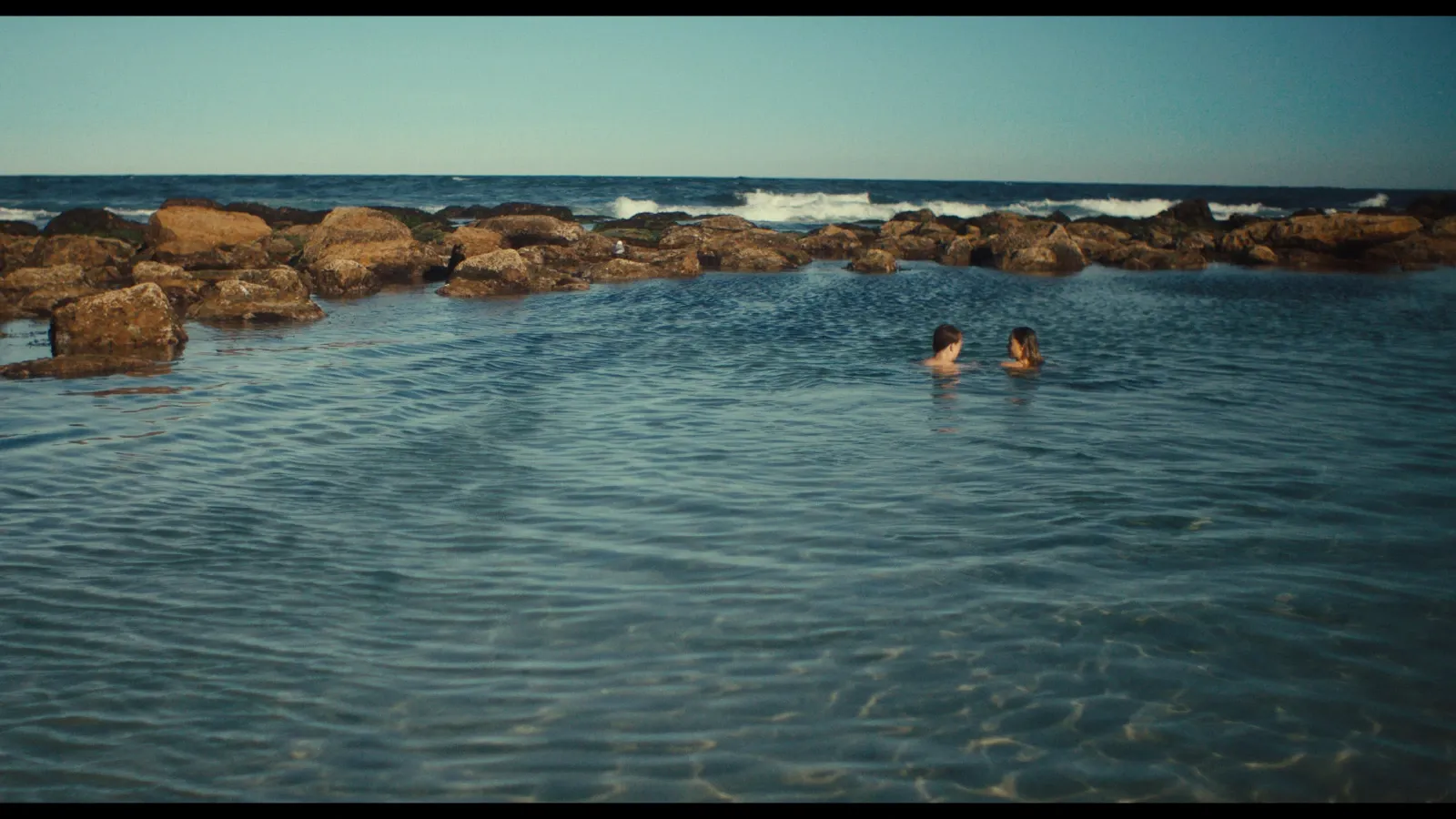
At the end of the day, Life Could Be A Dream's most notable visual motif is water. The opening scene of the underwater wedding dress recurs at key moments, but there's also effervescent bubbles, ocean ripples, crashing thunderstorms, creeping fog, steamy glass and rainbows in sprinklers.
Like love itself, water isn't a singular force: it drowns the characters but it also cleanses, refreshes, uplifts and renews. With this analogy in mind, the film's closing scene is poignant. The film opens with Sarah drowning alone underwater, but ends with mother and son diving into a calm ocean pool together.
So, what's the takeaway from Life Could Be A Dream?
Jasmin Tarasin has made a film that weaves together multiple kinds of dreams: romantic illusions, hopes for the future and subconscious inner truths. But it's also sharp with Australian summer: chips and seagulls, blue skies and white wine in the sun on Christmas Day.
In a landscape where films about family violence tend toward the harrowing or the redemptive, Life Could Be A Dream finds a third way: sun-drenched, patient, and full of unexpected tenderness. It's a beautiful debut, so catch it while it's on the big screen, where the light and water and sound can do their work properly.
Life Could Be A Dream is in cinemas around Australia May 14th - find a screening near you here.