Silenced Film Guide: Brittany Higgins, Amber Heard and the Legal Tactic Being Used to Silence Women
We dive deep into the Australian documentary exposing how defamation law is weaponised against survivors.

good.film
a month ago

Share
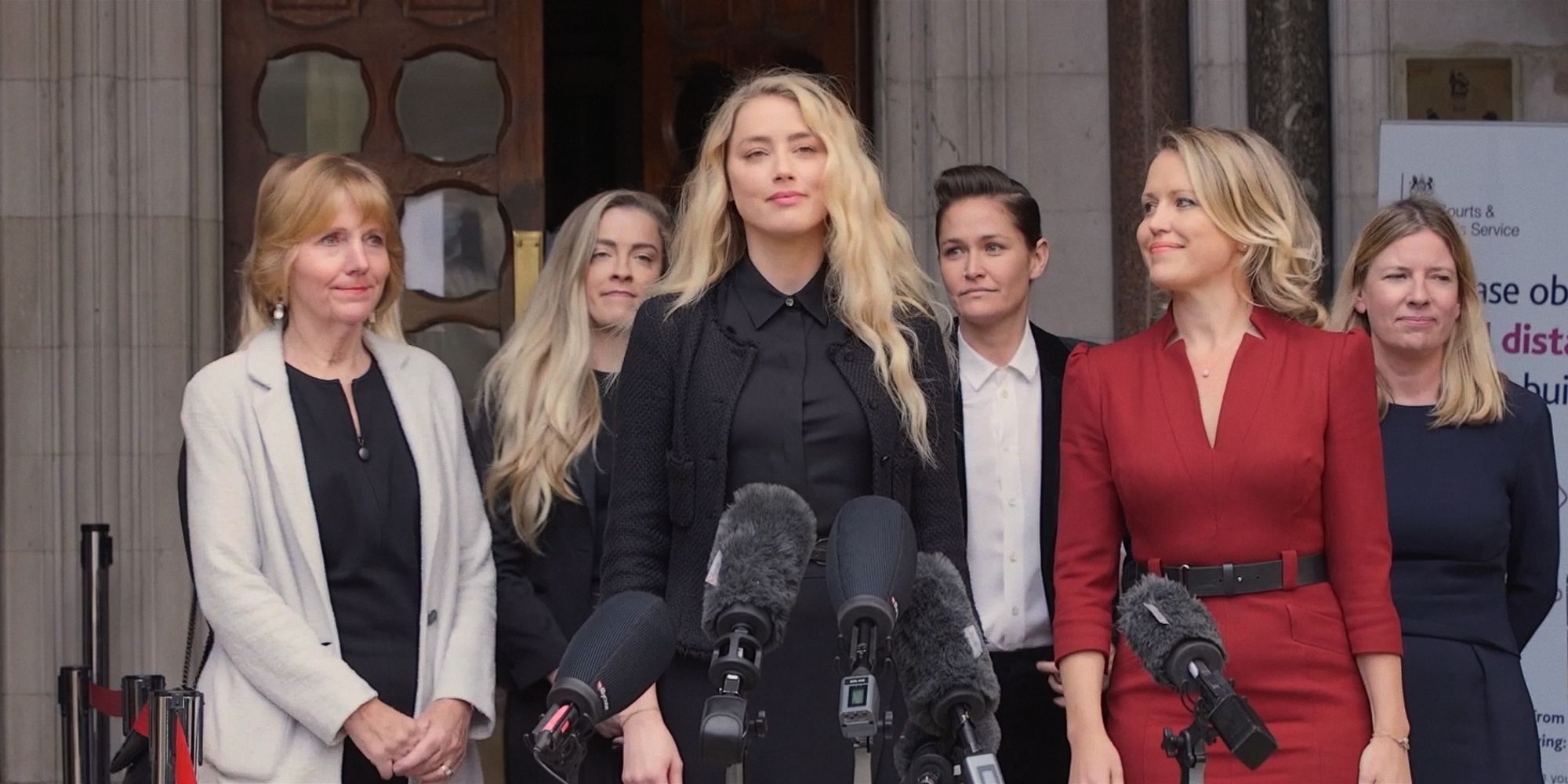
Silenced starts on an unremarkable grey day in London. But the scene that Jennifer Robinson is describing is far from unremarkable.
“I’ve been involved in quite a few high profile cases here at the Royal Courts of Justice, but I’ve never seen a scene like I saw outside court for this case.”
Jennifer Robinson is an Australian human rights lawyer with a mind-boggling career: representing Julian Assange and securing his release; achieving political asylum for West Papuan leader Benny Wenda; and successfully taking climate change to the International Court of Justice.
So she knows a thing or two about ‘high-profile’. But it’s still shocking to see the frenzied intensity of the paparazzi as Robinson accompanies her client, Amber Heard, into court, while fans of Amber’s former partner Johnny Depp scream abuse.
Robinson is clearly bothered by lingering negative sentiment surrounding Heard.
“People have this story completely wrong. They think they know Amber’s story because of what they saw on social media around the US trial. But what few people understand is, there was a trial here, two years before that, with a very different outcome.
And if you understand that context, you see everything differently.”
But wait, we got ahead of ourselves. What is Silenced even about?
Through a series of interwoven, deeply vulnerable interviews with high-profile survivors and journalists, Silenced helps us piece together the context that Robinson is talking about: defamation lawsuits being employed to tactically silence victims of gender based violence. It’s a legal tactic that’s gained traction in response to the rise of women speaking out as part of the #metoo movement.
The film manages to make complicated legal ideas super accessible, but what’s even more gripping is the emotion on screen. The vulnerability of the participants shines through, and it’s clear they trust the team behind the camera. Because of this trust and Robinson's global renown, Silenced features incredible interviews from Amber Heard, Brittany Higgins, Columbian journalist Catalina Ruiz- Navarro and more.
The Lowdown on Silenced
What's Silenced about? A documentary following human rights lawyer Jennifer Robinson as she exposes how defamation lawsuits are used to tactically silence survivors of gender-based violence.
Who directed Silenced? Selina Miles
Who stars in Silenced? Jennifer Robinson, Amber Heard, Brittany Higgins, Catalina Ruiz-Navarro
Where can I see Silenced? In cinemas nationally from September 3rd.
Where did Silence premiere?
The film is jaw-dropping at times, and the buzz of the audience was palpable when we attended the Australian premiere at Sydney Film Festival Opening Night. Before that, Silenced premiered at Sundance, played to sold-out audiences at Melbourne International Film Festival, and has been receiving an incredible response on social media. It’s testimony to the fact that this film is not just powerful, but timely. It captures the conversations and potentially seismic social changes we’re experiencing right now.
Who’s the team behind Silenced?
Silenced is made by a female-led, Australian team: director Selina Miles and producer Blayke Hoffman are International Emmy Award-winning filmmakers who last collaborated on Harley & Katya (2022).
What are the main takeaways from Silenced?
Silenced centres on defamation law being misused as a weapon. We won’t get too deep into the definition of defamation here (the film does a great job of breaking the legal concept down), but we’ve got a quick explainer on our Instagram. Essentially defamation is based on the premise that someone’s personal reputation deserves legal protection: if yours is damaged, you can sue the person responsible.
The film packs a huge amount into 90 minutes, but we wanted to dive deeper into three of the main takeaways for you: the personal cost of a weaponised defamation lawsuit, the public cost, and the related social media pile-on.
The personal cost of "winning"
Silenced shows how perpetrators of gender-based violence don’t need a positive verdict in order to use defamation law to their advantage. The most striking example of this is shown through a series of deeply personal interviews with Brittany Higgins.
If you’re Australian, Higgins needs no introduction. If you’re reading from elsewhere: Higgins was working as an Australian political staffer when she reported that she’d been raped in Parliament House by a colleague. Her case became part of a national firestorm about sexual misconduct in places of power.
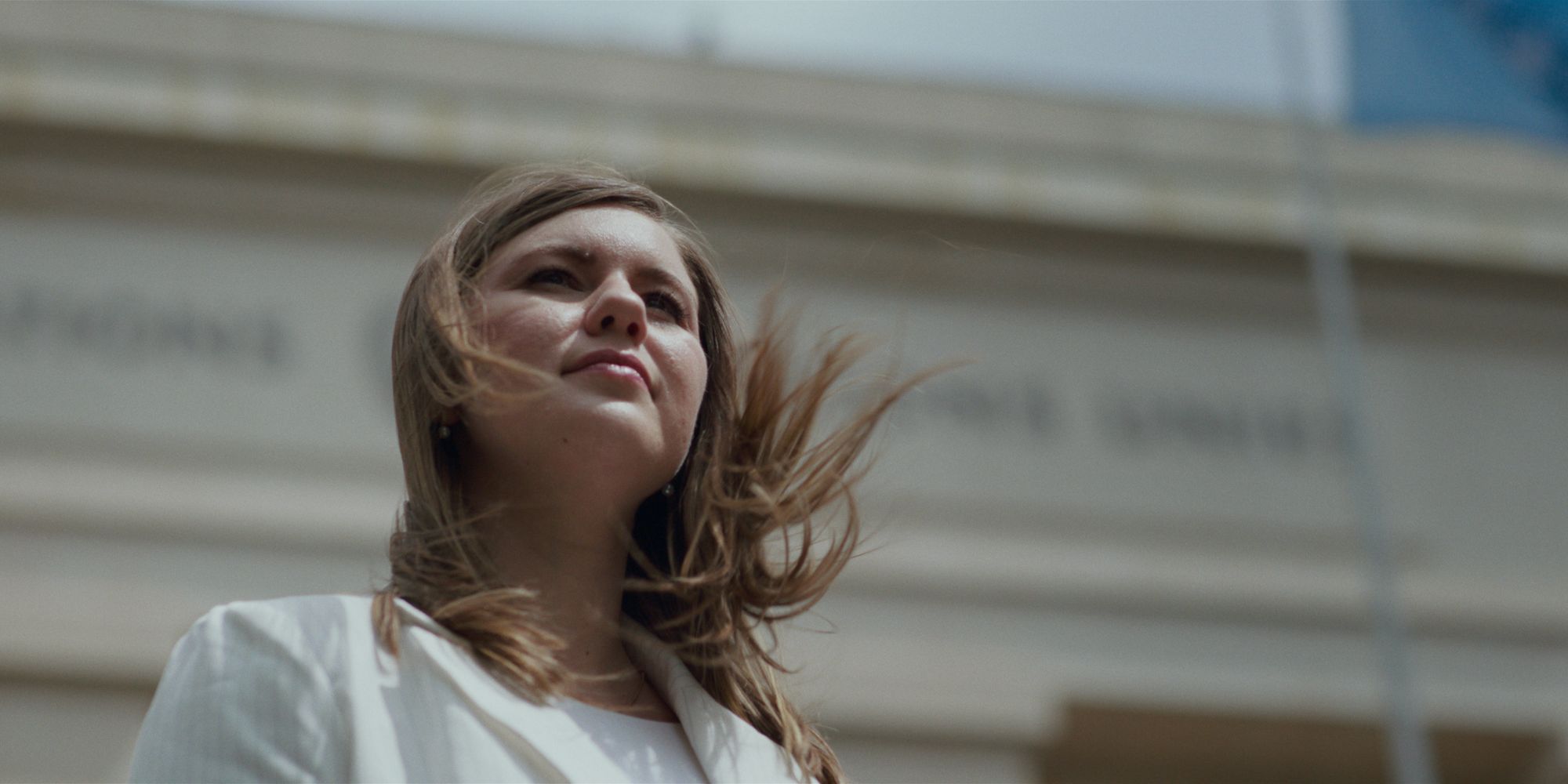
Brittany is remarkably frank, and her ongoing fragility is clear in her voice. But her bravery is astounding.
“I’d heard that the process was ugly. And I knew it would be terrible. They’ll take every bit of data that you have, your diaries, my counselling records, my doctors visits, everything. You have to hand over everything.”
So getting ready for that process every morning, putting on clothes that make you look like someone that is a) “rapeable” (quote, unquote) and yet someone who is also respectable… It’s so nerve wracking and so stressful.
Many of the women targeted with lawsuits in Silenced win their cases, but emerge destroyed.
Some are dragged from lawsuit to lawsuit, forced to recount their abuse over and over when called as a ‘witness’ in legal disputes between their alleged abuser and media covering their case.
It’s hard having to re-live the details in front of your family. Your perpetrator. It was just as traumatising as the rape itself, I’d say.
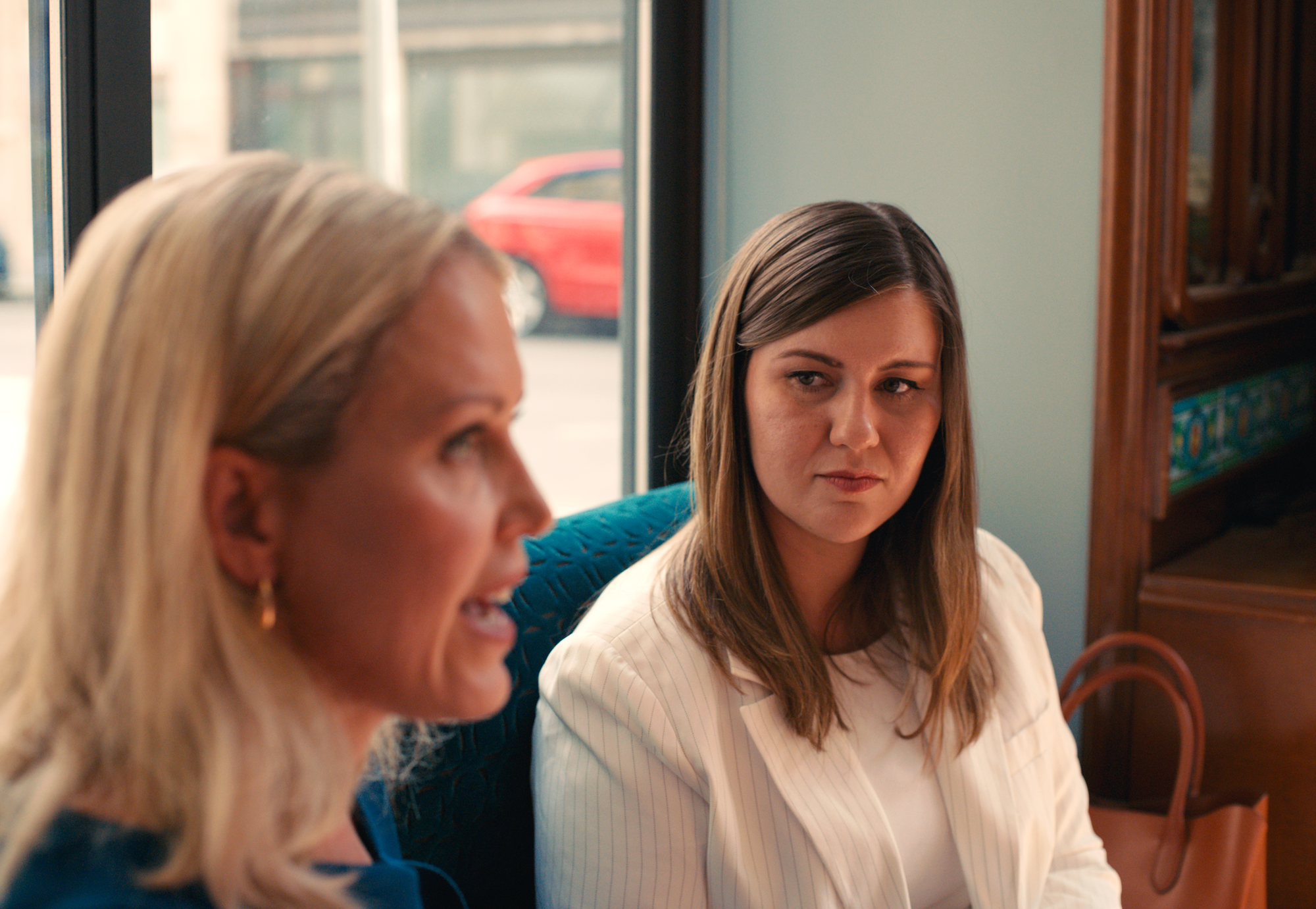
Brittany shares how she was hounded by the press, publicly trolled, stalked and subjected to death threats. The impact of speaking up on her life and mental health has been devastating.
By sharing Brittany’s experience of the court process, Silenced gives deeply empathetic insight into why defamation threats have such a chilling effect. It’s not the fear of a verdict, but the very real risk of bankruptcy, exhaustion, invasion of privacy, public harassment and re-traumatisation that are often enough to stop victims from ever speaking about their experiences.
The public cost of silence
There’s a name for using defamation as a tool, a legal threat, in this way: it’s called a SLAPP, which stands for "strategic lawsuit against public participation”. The Human Rights Law Centre is so concerned about the rise in this trend that they’ve launched a Stop the SLAPP campaign, which includes case studies of environmental advocacy groups and workers’ rights orgs being harassed by “attack-dog” law firms. They make the case that using lawsuits to intimidate people into silence is clearly not the way the law was intended and has a chilling effect on justice and democracy.
Silenced shows that the tactics used by perpetrators to shield their reputations often follows the SLAPP pattern. And defamation threats don’t just silence victims, but journalists and advocates working to highlight systemic issues and make change.
Is the pile-on the point?
Alongside the use of tactical legal threats, there’s another, closely interlinked issue at the heart of Silenced: the public frenzy that has come to accompany defamation suits in recent years.
Amber Heard’s story is perhaps the modern world’s most extreme example. The film starts with Jennifer Robinson explaining how Heard’s former partner Johnny Depp lost his defamation lawsuit against the publisher of UK paper The Sun, who called him a ‘wife beater’. Heard was called as a witness, and the judge found The Sun’s statement "substantially true", in light of 12 instances of physical violence.
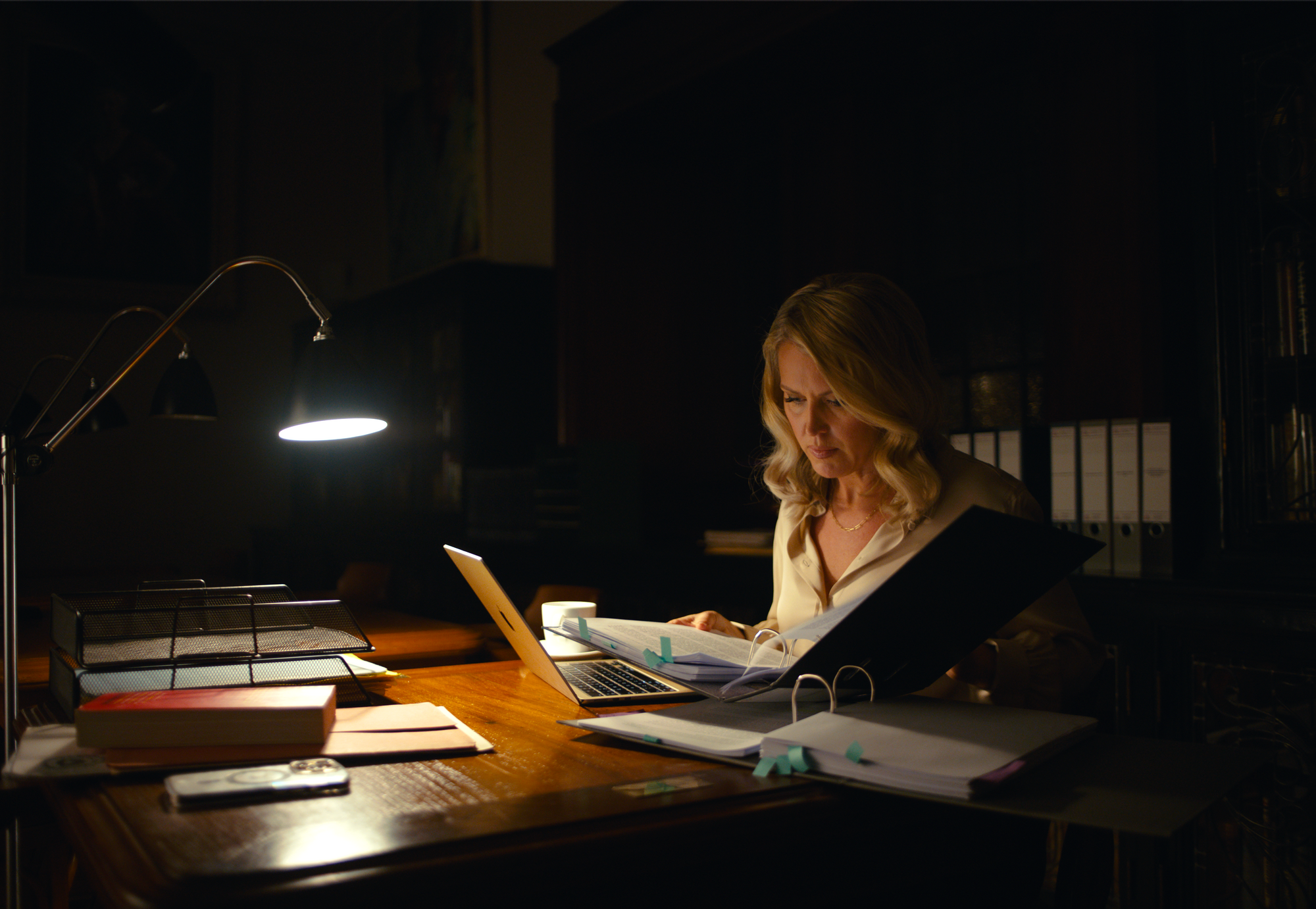
When Heard wrote an op-ed about the need to protect survivors of family violence, she didn’t name her former partner. But Depp’s lawyers filed a second defamation claim, this time in a US state (Virginia) where neither he nor Heard lived.
In Virginia, court cases can be broadcast on TV. When Heard testified, social media turned the case into a frenzied online spectacle, and she was subjected to a tidal wave of misogynistic memes. One of the most breathtaking moments in Silenced is an interview with Tortoise Media. Their investigation found that over half the tweets attacking Amber Heard during the trial came from bots and paid trolls, deployed to manipulate a wave of hateful public sentiment that exists to this day.
“I feel that there was a real danger that what happened online jeopardised her right to a fair trial.”
Smear campaigns don’t just harm their immediate targets. According to Teach Us Consent, “For victim-survivors, Heard’s story serves as a warning: if you choose to speak up, the narrative isn’t yours to control.”.
Defamation lawsuits have become part of a larger post-#MeToo culture war, and are being used to mobilise mass online misogyny, sucking victims-survivors into the manosphere and subjecting them to a level of harassment it’s hard to comprehend. Teach Us Consent is approaching this issue from a different angle: asking for more regulation over social media algorithms with their #FixOurFeeds campaign.
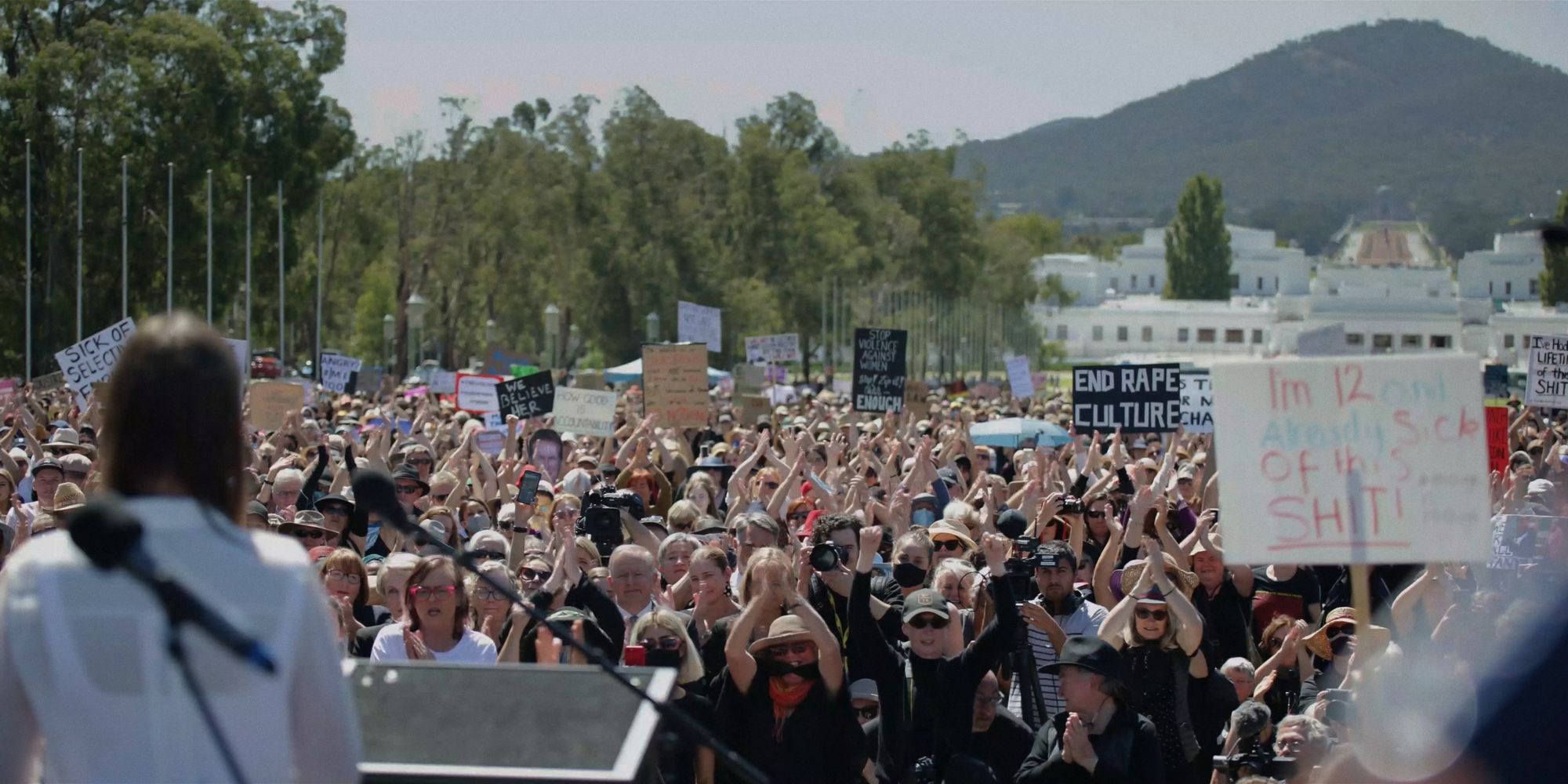
So what steps can we take?
So now you’re asking yourself: OK, but what can we do? How can we make a better system for survivors, and work towards a healthy, fair, democratic society as a whole?
Thankfully, we know the right people to have the conversation with. Silenced is holding preview screenings in capital cities around Australia followed by a series of Q&A panels: you’ll hear from lived experience advocates, lawyers, journalists and the filmmakers themselves.
We were at the Hayden Orpheum screening this week and felt so inspired leaving the cinema - it's a great chance to hear from the legends working on the coalface.
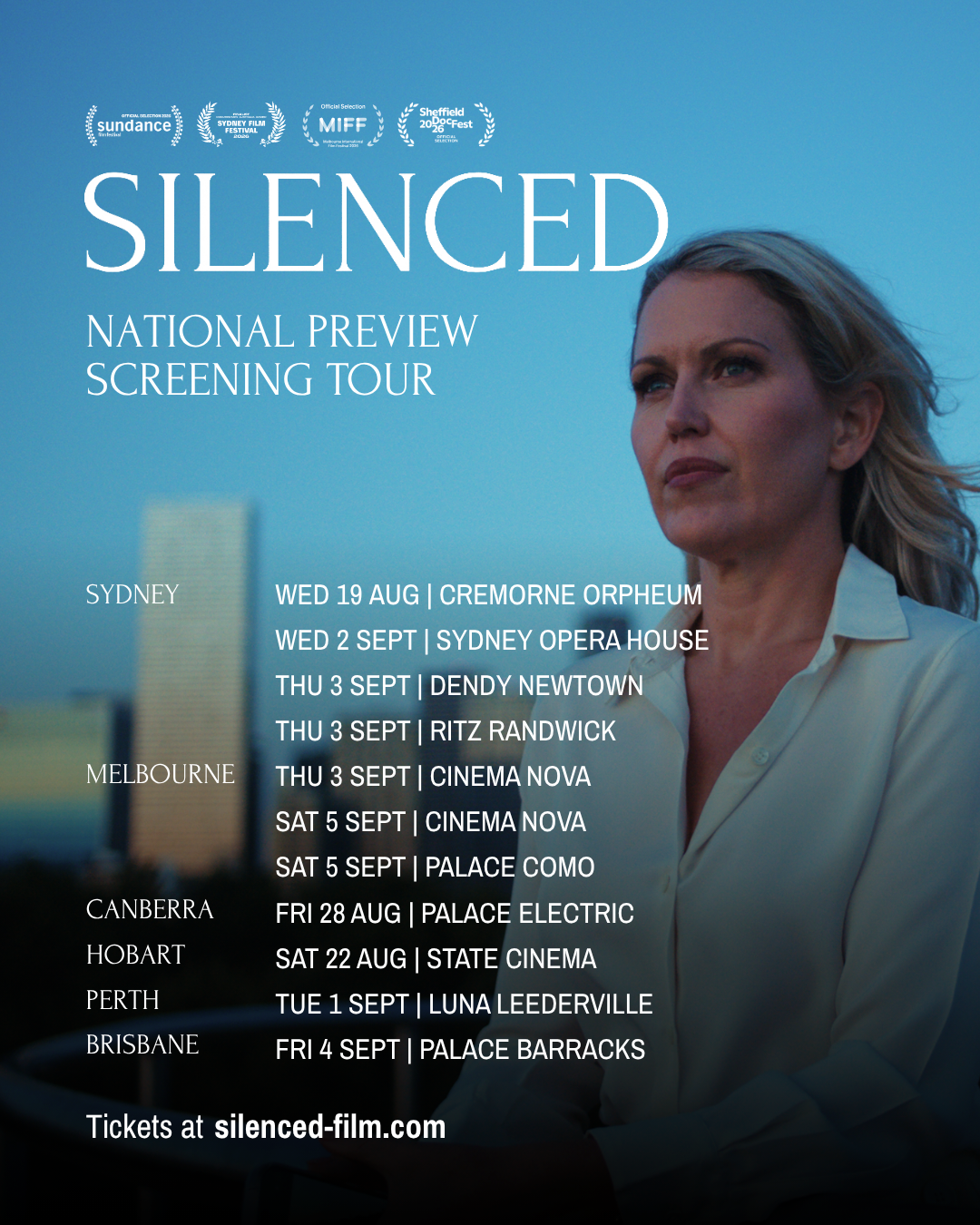
Find out more about the screenings and grab tickets at www.good.film/silenced.
If you or anyone you know needs support, there’s a really thoughtful collection of resources at www.silenced-film.com/get-support. From there you can also check out the film’s ‘Take Action’ page.