Is Wicker Olivia Colman's Citizen Cane?
Dive deeper into the themes of the film Wicker, as we review the film's ideas about gender roles and healthy relationships.

good.film
4 days ago

Share
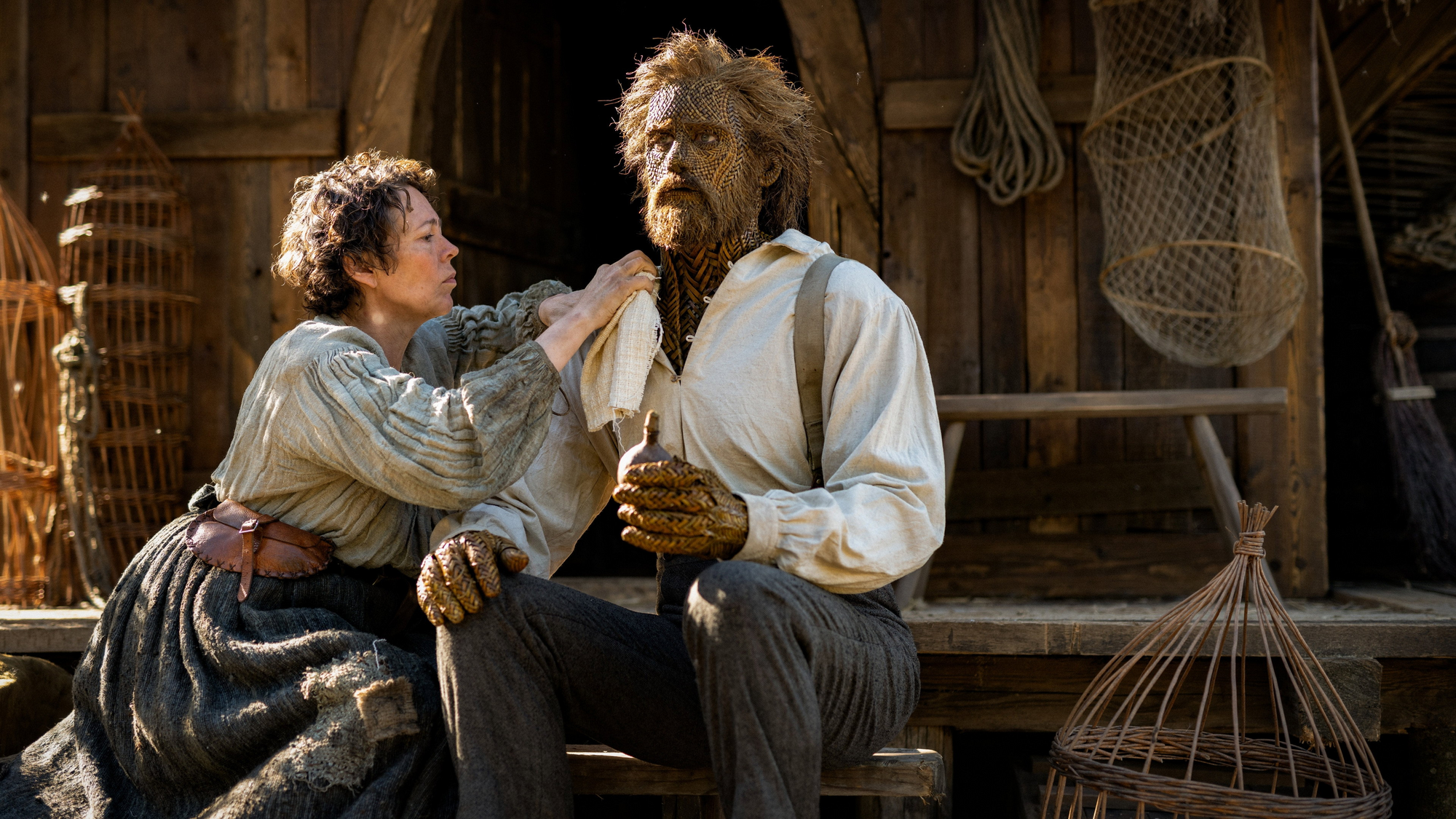
In January this year, a medieval comic romantasy starring Olivia Colman and Alexander Skarsgård premiered at Sundance. It received positive reviews from critics (“bold, strange, romantic, and deeply human”), but didn’t seem to make a huge splash..
Fast forward to when the film’s trailer dropped on social media, and all of that changed. The trailer teased steamy scenes of an unkempt Fisherwoman (Colman) and sexy Wicker Man (Skarsgård) making sweet, sweet, basket love, and the internet went mad for it.
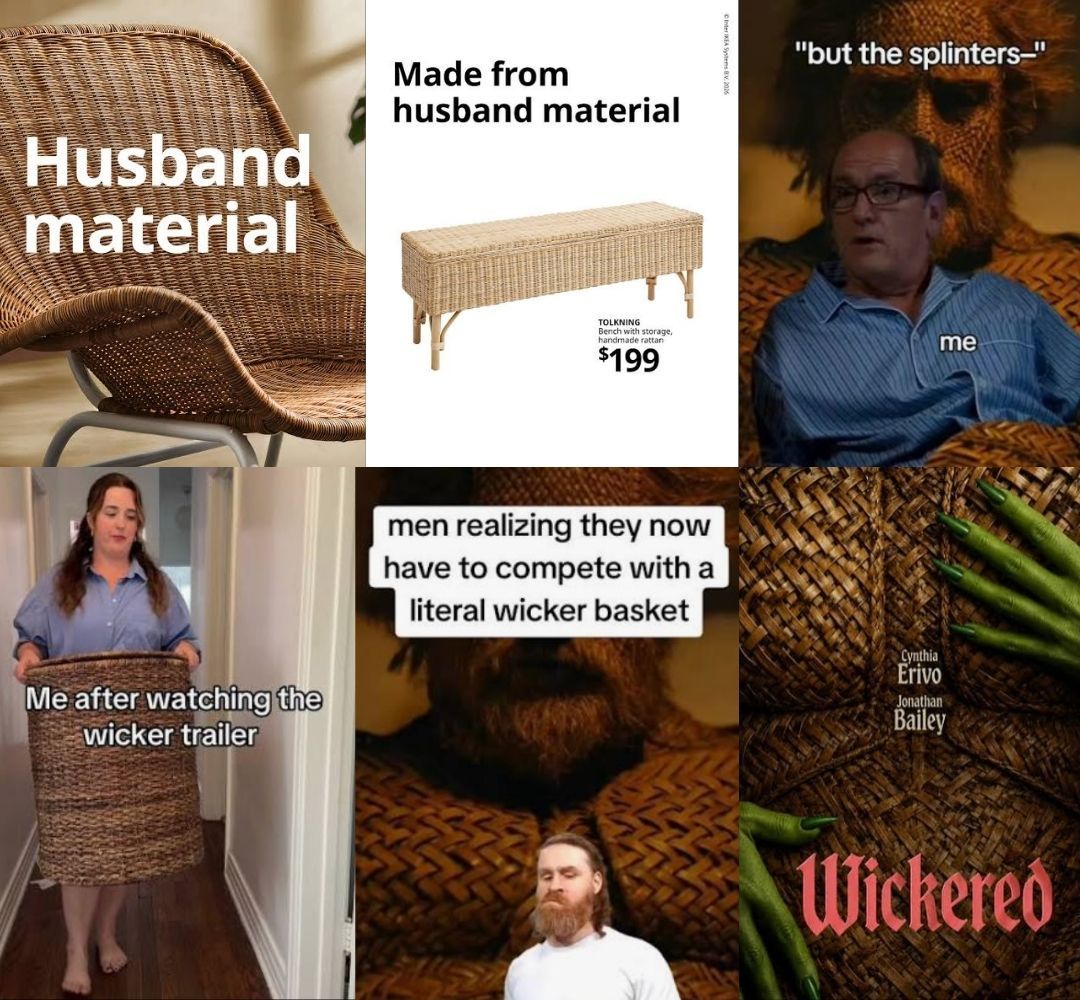
The film’s marketing responded to this enthusiasm and Wicker was quickly re-posititioned as a saucy romance story; complete with a revised Mills & Boon-inspired poster.
We’ve had a sneak preview and Wicker packs a lot of what we love into its story of basket erotica! In amongst the fun there’s some thoughtful and timely commentary on relationships and gender roles, and we thought that we’d break them down so when you see it in cinema (from 5th November) you can take the post-cinema chats into interesting territory.
What’s Wicker About? A lonely fisherwoman in a parochial village is sick of being the town joke, so commissions a husband from the local basketmaker. The Wicker Husband’s arrival sends the village into disarray.
Who Directed Wicker? Alex Huston Fischer and Eleanor Wilson, the duo behind Save Yourselves! Fun fact: Wilson is originally from South Australia!
Who Stars in Wicker? Olivia Colman, Alexander Skarsgård, Peter Dinklage, Elizabeth Debicki (also an Aussie!).
Where Can I See Wicker? In cinemas from November 5. Get discount movie tickets to Hoyts, Village and Event here.
What is Wicker About?
Wicker is set in a small, fable-esque medieval village, and the story centres around Fisherwoman. Her lack of a husband (and her smelliness) is sneered at by the women of the village, but this also exempts her from the strict gender roles that organise everyone’s lives. With the exception of Fisherwoman, all of the village women are defined by their relationships to men: Tailor’s Wife (formerly Doctor’s Daughter), Baker’s Wife, Innkeepers Wife and so forth.
After a comical village wedding scene (in which the groom literally places a large collar around his newlywed’s neck) Fisherwoman endures even more teasing. Lonely and resentful, she resolves to turn the tables, and asks the local basket weaver (the fabulous Peter Dinklage from Game of Thrones, and much much more) to make her a husband. The Basketmaker rushes to the task, and a month later, Fisherwoman’s rattan man meets her at the chapel.
To her surprise, her new relationship is totally unlike those in the village. Her Wicker Husband is kind, patient, loving, helpful, respectful, and yes… sexually generous. She continues to catch fish while he stays home to help around the house. They seem genuinely happy - and this starts to create cracks in a deeply hierarchical village. Suddenly, the women of the village see new possibilities modelled for them, while the men are forced to face their loneliness and disconnect from their own families.
As this seething mix of jealously, resentment, frustration and alienation gathers pace, Wicker starts to come into its own. As the townsfolk bicker and the social fabric of the village unravels, even the Fisherwoman and Wicker Husband’s wholesome relationship becomes marred by the spreading poison.
The film has elements of parable, but it’s done in a way that you never quite know what’s going to happen next. Wicker manages to balance its wry humour and quirkiness with some genuine thematic punches. Here’s the three themes we thought hit the hardest.
What does Wicker Have to Say About Gender Roles?
There’s been a fair amount of talk this year about how ‘traditional’ gender roles are making a comeback in modern society. Groups like The Man Cave have blamed “manosphere” content for a revival of patriarchal attitudes towards women amongst young men. Wicker is a cheeky reminder that patriarchal systems aren’t just repressive for women, but limiting for everyone.
The men of the village are jealous of the Wicker Husband: not just because their wives are making heart-eyes at him, but because of the admiration he receives from his partner. They feel dismissed, isolated, and struggle to live up to expectations as lovers and breadwinners. Compelled to compete, some begin to help around the home, and are surprised by the positive response from their wives. Although Wicker is a historical fantasy on the surface, it’s a modern allegory underneath: studies have shown that relationship quality is better among couples who share parenting, chores and mental load. It’s not a Disney princess take on true love, but feels all the more relatable for it.
How is love and marriage portrayed in Wicker?
Some reviewers have called the film ‘anti-marriage’, but we didn’t interpret it that way. Wicker is about different ideas of marriage. On one side, there's the frivolous traditions of the villagers: iron collars, exploding fertility eggs and goats nibbling inappropriately placed carrots. These rituals aren't underpinned by love, and Fisherwoman rejects them, politely waving off the collar with 'Oh, that won't be necessary'. Her marriage becomes a modern union, built on trust and mutual respect instead of tradition and expectation.
One thing that hung around in the back of our mind while watching Wicker was “wouldn’t this be reeeaaally icky if the roles were reversed: an involuntarily celibate man commissions a naive and compliant woman”? The answer is, of course, yes, ew, gross. Wicker is not meant to be an unproblematic parable: Fisherwoman’s questionable ethics are interrogated a little more as the film rolls on. Her journey as a character becomes an important lesson in love: you don’t own or control your partner.
This grounded take on romance makes the film feel surprisingly real, so it made total sense to learn that Wicker’s co-writers and directors, Eleanor Wilson and Alex Huston Fischer, are a husband and wife team. The directors have said that many of the relationship jokes in the film were at their own expense: “We got to make fun of ourselves in all the different married couples of the movie.”
How to bring lateral violence into your conversations about Wicker?
Maybe the term ‘lateral violence’ seems a bit heavy to bring into a conversation about a schmexy basket, but Wicker actually does a fantastic job at illustrating the concept. Lateral violence (or ‘horizontal hostility’) is a destructive pattern of behaviour where members of a marginalised or oppressed group direct their frustration, anger or powerlessness towards their own peers, family or community members, instead of the external systems causing the problem. This theory was explored in one of the first films we worked on, Origin. In Australia, it’s often studied and discussed in relation to Aboriginal communities, but the term ‘horizontal hostility’ was originally coined to describe in-fighting in the women’s rights movement in the 1970’s.
One thing Wicker does so well is show why this kind of sideways lashing-out happens. Australian actress Elizabeth Debicki, who plays the bitter Tailor’s Wife, broke this down: “It’s like a kind of microcosm of a very patriarchal system, where the women are subordinate to the men, and so there’s a very strong status quo. As a woman, you can only climb this high. And that is as high as you can go and you’re expected to walk that path. So anybody who strays from that model threatens you….the threat is the knowledge that a different way may be possible.” (Watch her take on our Instagram!)
Rather than being angry at the system, the Tailor’s Wife instead perceives Fisherwoman as a threat to her status quo. It’s a very believable example of how and why downtrodden people direct their frustration at others in their community, particularly when the underlying problem seems so intractable.
Will I like Wicker?
Wicker strikes a great balance between being super entertaining and providing excellent fodder for post-film chats. We’ve gone full nerd on you, but Wicker does not take itself too seriously, and Olivia Colman is simply PERFECT in her role as the lonely, naughty, resilient, flawed Fisherwoman. The rest of the cast doesn’t miss a beat either: Skarsgård is, well Skarsgård, Debicki nails the complex and misunderstood Tailor’s Wife and Dinklage is mysterious and crafty as the Basketmaker (apparently he got into basket weaving for real on set!).
Wicker hits Australian cinemas Nov 5th. We’ve got discounts if you’d like to see if for less: Good Tix are our cheaper movie vouchers that also do some good.
Pass the Popcorn! 🍿