Wolfram Review: Warwick Thornton's Redemptive, Hard-Won Australian Western
We sat down with Warwick Thornton and Deborah Mailman ahead of the release of Wolfram — a dark, redemptive Australian Western in cinemas now.

good.film
5 months ago

Share
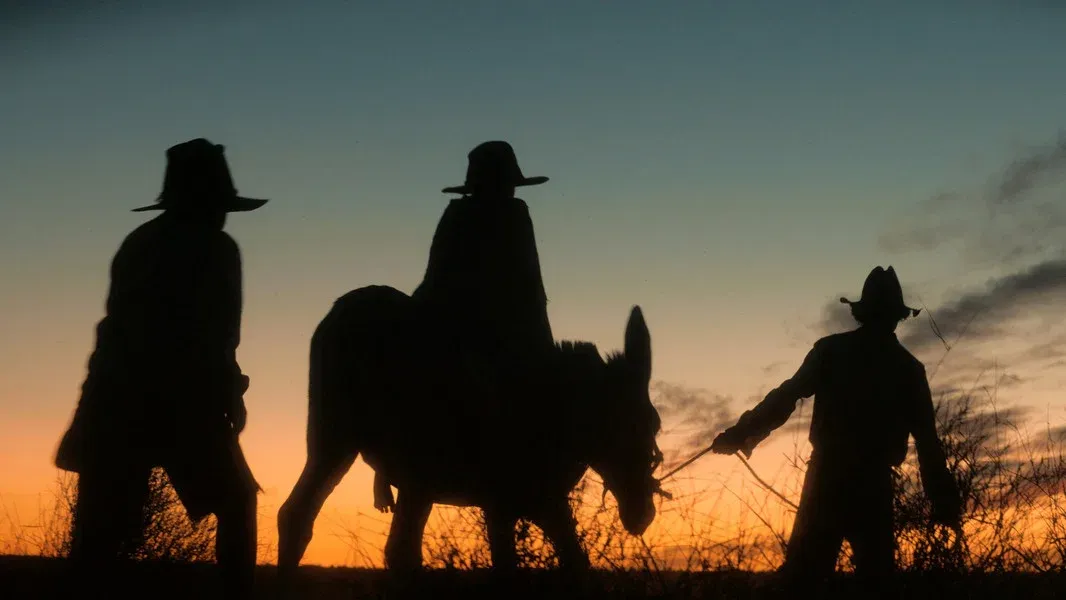
We're doing something a bit different this week. Last Friday, we attended a preview Q&A screening of Wolfram, by legendary Australian director Warwick Thornton (Samson and Delilah, The New Boy, Sweet Country). We had the opportunity to interview Thornton and the film's star Deborah Mailman, then hear from both at the Q&A after the film.

In most of our film guides, we give you our interpretation of a film's themes and deeper meaning. But this time, we've decided to foreground Thornton and Mailman’s words as much as possible - so read on for some personal insights from two of the Australian film industry's greatest talents, plus a healthy dose of larrikinism and swearing (you've been warned!).
The Lowdown on Wolfram
What's Wolfram about? Three Aboriginal children escape forced labour in a 1930s Central Australian mining town and are pursued across the outback, while their grieving mother fights to find them.
Who directed Wolfram? Warwick Thornton
Who stars in Wolfram? Deborah Mailman, Pedrea Jackson, Hazel May Jackson, Eli Hart, Thomas M. Wright
Is Wolfram a true story? It draws on oral histories from many First Nations families, including Thornton's own, to recreate a little-known chapter of Australian history.
Where can I see Wolfram? In cinemas April 30th. Get discount movie vouchers to see it at Dendy, Event, Village and Hoyts cinemas.
What's the story with Wolfram?
Wolfram is the latest film from Warwick Thornton, one of Australia's best directors. A Kaytetye man born and raised in Mparntwe (Alice Springs), Thornton centres Indigenous experiences in his work, which is acclaimed around the world (his debut feature, Samson and Delilah, won Caméra d'Or at Cannes and was shortlisted for an Academy Award).
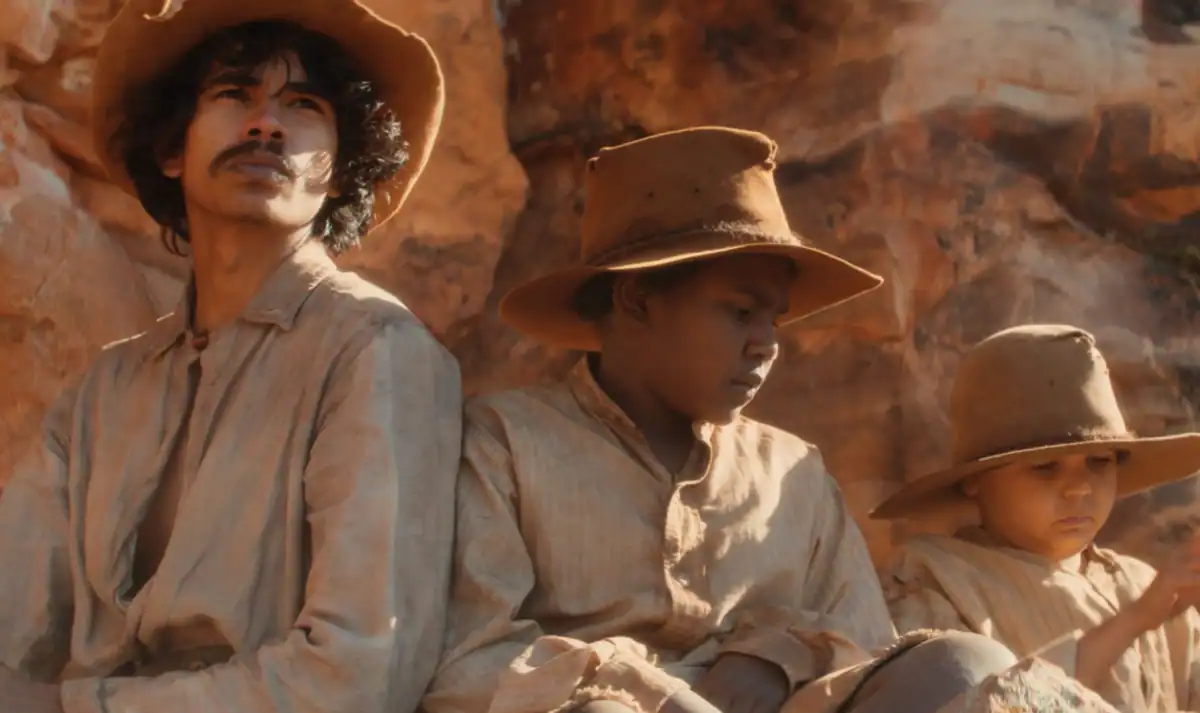
Wolfram is a rollicking Western set in a 1930s mining community in Central Australia. Pansy (Deborah Mailman) is a grieving mother desperately hoping to be reunited with her children, Max and Kid (Hazel May Jackson and Eli Hart), who are being forced to work in the mines. When Max is kidnapped by outlaws Frank and Casey (Joe Bird and Erroll Shand), Kid sets out to find them. They reunite at an outback station and meet indentured teenager Philomac (Pedrea Jackson). Together, the three Aboriginal youths escape and are pursued across a dramatic landscape by men on horseback.
What's the link between Wolfram and Sweet Country?
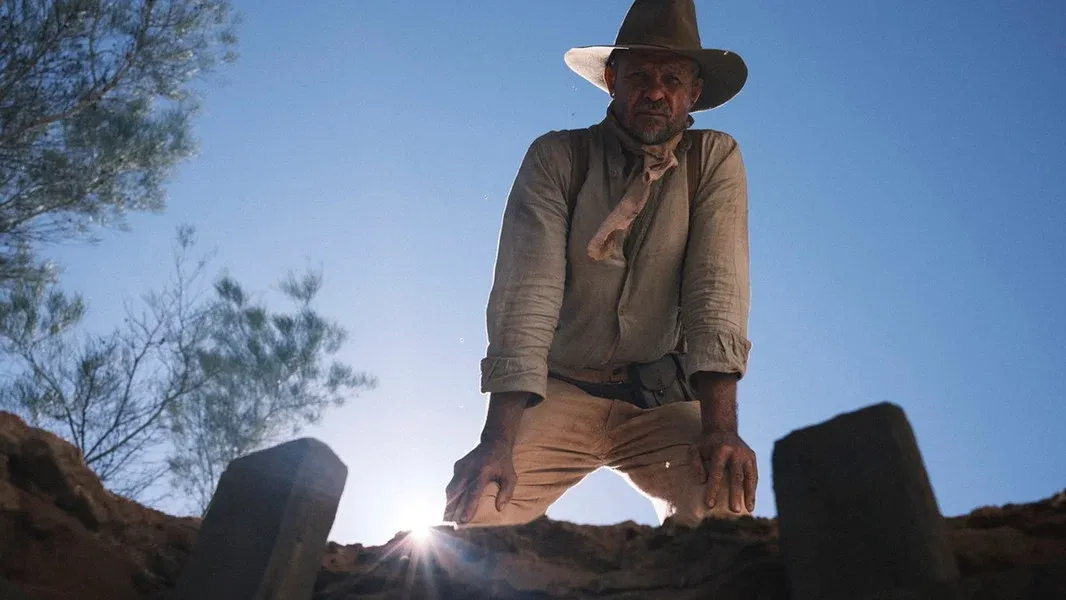
If you've seen Thornton's earlier film, Sweet Country, you'll recognise the setting and several characters, including stationmaster Kennedy (Thomas M. Wright) and the now-grown Philomac. If you haven't, don't let that put you off - Wolfram stands alone.
However, when Thornton first heard screenwriters Steven McGregor and David Tranter were working on "the sequel to Sweet Country", his reaction was unambiguous:
"I was like, for f*ck's sake. I am not going to go anywhere near that. Cos I've got a lot of trauma around Sweet Country. It just hurts."
But reading the script changed everything:
"This film is actually... It's a cure for Sweet Country. Sweet Country is so poisonous. This is actually the cure. And then I realised it actually has a f*cking reason to be there."
The pain that Thornton clearly feels around Sweet Country sits just below the surface of the conversation: the film was a true story, and he seems haunted by the act of immersing himself in something so horrific and unjust.
Is Wolfram also a true story?
Like Sweet Country, Wolfram is deeply rooted in historical accuracy, but this time it's not a retelling of one specific event. Instead, it draws on oral histories from many families, including Thornton's own. He tells us this process is about:
"Talking to grandmothers. They, for some reason, have a better memory than the grandfathers…"
Tales of the 'mad uncle who ran away', children labouring down dark mineshafts, love stories and massacres all entwine in Wolfram. But it’s the freedom to reweave these strands and ultimately craft some semblance of justice that seems transformative for Thornton:
"It actually is the bookend of something that I am upset about, which is Sweet Country. And this is the answer to it. It has redemption. It has sanctity."
What does 'wolfram' mean?
You know how films always open with production logos? In Wolfram, these drift out of the darkness accompanied by the insistent sound of a hammer and chisel. By the time the picture joins us, we're anticipating a craftsman at a workbench, or a prisoner tunnelling free. Instead, we're welcomed into this world by a small Aboriginal child chipping away in a dimly lit mineshaft.
"There's a piece of metal called tungsten, and it used to be called wolfram."
Thornton explains: tungsten hardens steel.
"So every time we went through a world war, the price of wolfram became just as expensive as gold. Empires and idiots needed to create harder metals so they can create guns, barrels, bombs, and shit. And in Alice Springs we don't have much gold, but we have a f*ck-tonne of wolfram. So it's like another gold rush, but it's a piece of metal to make... to kill people."
Between 1914 and 1918, Australia mined almost half of the world's entire supply of wolfram, often exploiting local Aboriginal children for free or cheap labour in miserable conditions.
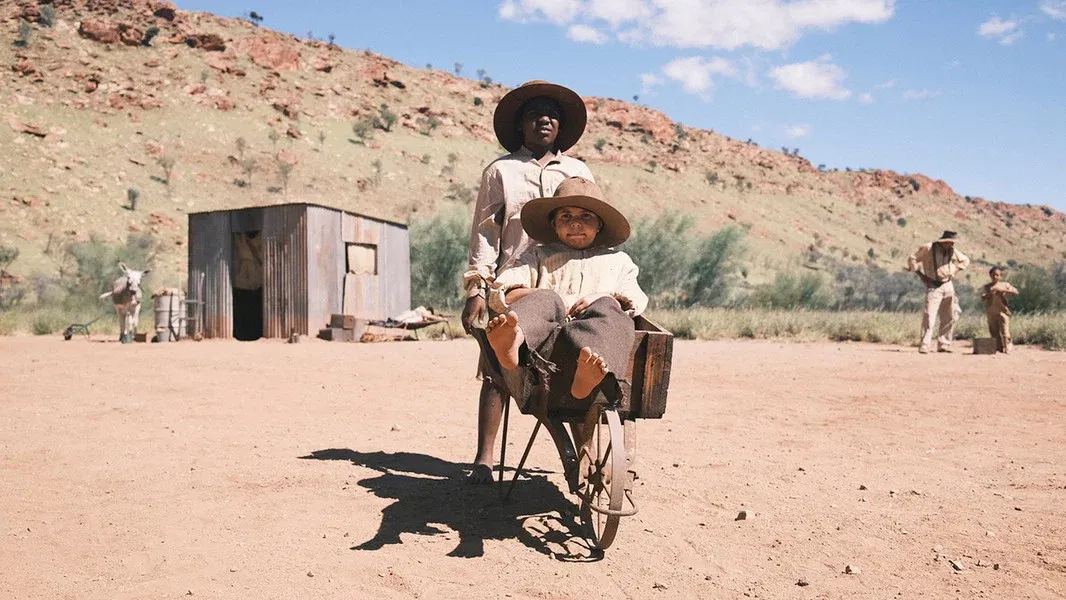
The film is set in the 1930s, as the price of wolfram crashes. The white colonists' relationship with the land is purely transactional, so a sense of precarity runs throughout - one early scene centres on a dead horse in the middle of the main street. Sweat, flies and desperation fill the air.
How do Chinese Australians feature in Wolfram?
One of the film's most striking qualities is the solidarity between its Aboriginal characters and the town's Chinese miners. Pansy is in a relationship with Zhang, a kind man who recognises her anguish at being separated from her children: "We'll go to Queensland, get some gold, then I promise you - we'll come back for them." Later, Chinese miners risk their own safety to help the children and Philomac evade the bad guys. There's even a scene in a dusty tin alleyway where traditional martial arts delivers a first-pumpingly satisfying moment of comeuppance for the racist, arrogant Frank.
For Thornton, this solidarity is rooted in lived history:
"When you have different nationalities and cultures being persecuted by the Western existence and the White Australia policy - we all get together! We're on the bottom of the food chain and we have to help each other. And what happens when we all get together? Well…"
He pauses for comedic effect.
"…we start rooting!"
"We have these amazing Chinese, half Chinese half Aboriginal families. We have the most amazing Japanese, half Japanese half blackfella families. And that was important for us. To make them part of our existence."
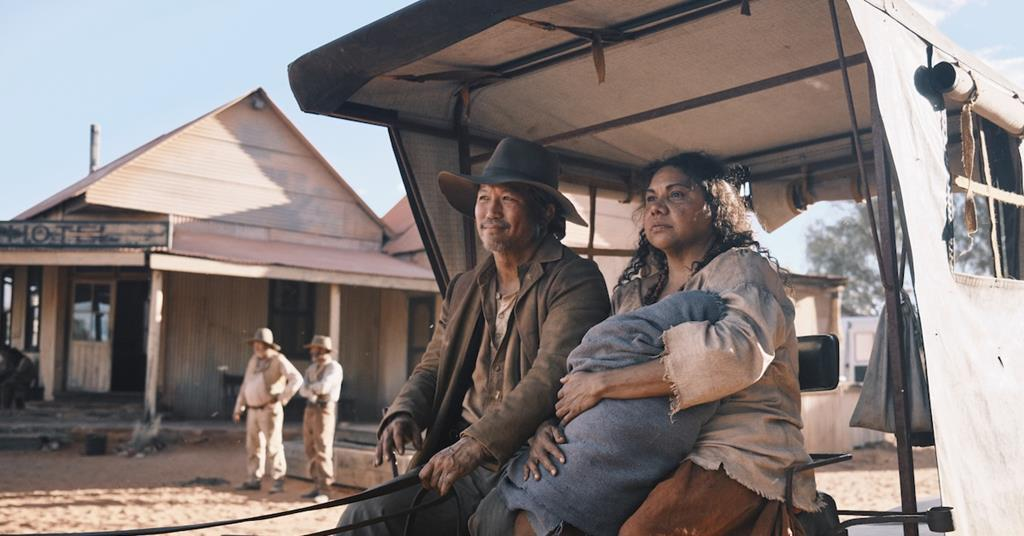
Mailman sees this as correcting a distorted national story:
"This is our history. It's who we are. And we're not just a small demographic of this country, which often is the bigger sort of dominant narrative that this country presents itself with."
"It's not just Aboriginal Chinese. You've got the Aboriginal Japanese, the Aboriginal Afghan - these are relationships over generations that were really strong. So I'm really glad that's in there because it is a really untold story."
Who's the star of Wolfram?
There's a shot in Wolfram that gave us goosebumps: fat raindrops hitting red earth, the frame sliced through by a freshly laid veranda. Later, the sound of gunshots gives way to the image of chubby, squirming tadpoles. Rich eddies of dust rise from horses' hooves, and then the horses themselves become insignificant within vast landscapes. In one scene, Philomac helps the kids cross a creek, and the creek itself feels like the main protagonist. Country doesn't just feature in Wolfram - it watches over everything in it.
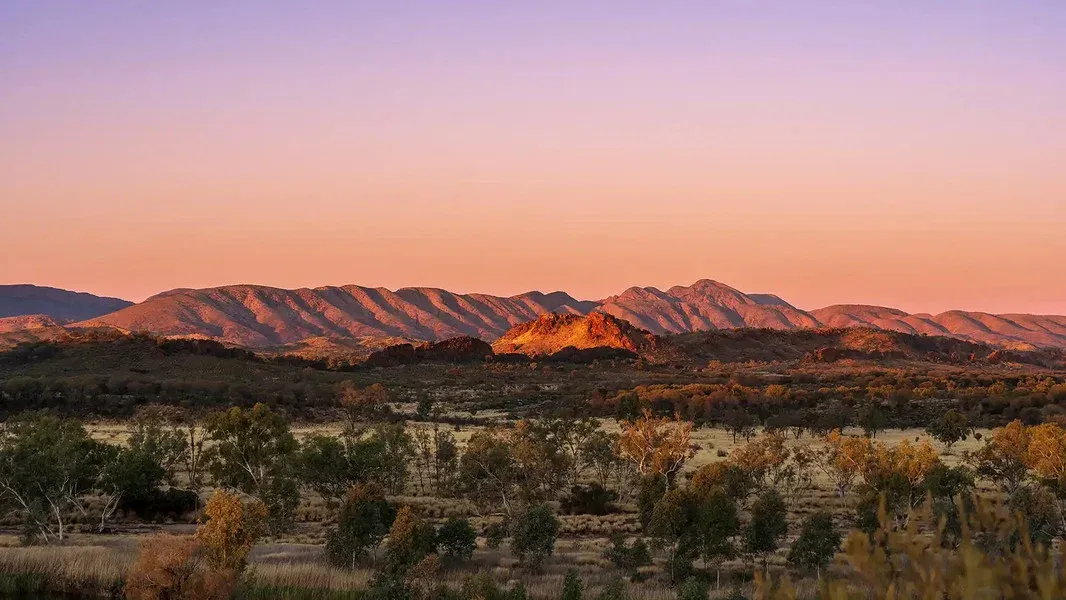
This is made possible because of Thornton's unique position as both director and cinematographer. He’s got a classic tongue-in-cheek take on this:
"People say that's cheating, because you have to be tormented by some wanker cinematographer if you're directing, or if you're a cinematographer you have to be tormented by some f*cking wanker director. I just went... I'm going to get rid of the middle man."
He’s self-depreciating, but his mastery of the craft leads to stunning on-screen moments. This visual instinct extends to sound. The loud, incessant buzzing of flies carries across scenes, turning a diegetic detail in one frame into an ominous sonic metaphor in the next (keep an ear out for this when you watch the film!). Thornton cites Russian WWII film Come and See as an influence:
"They did something with sound that absolutely impressed me all my life - understanding that sound can be much more visual than the camera."
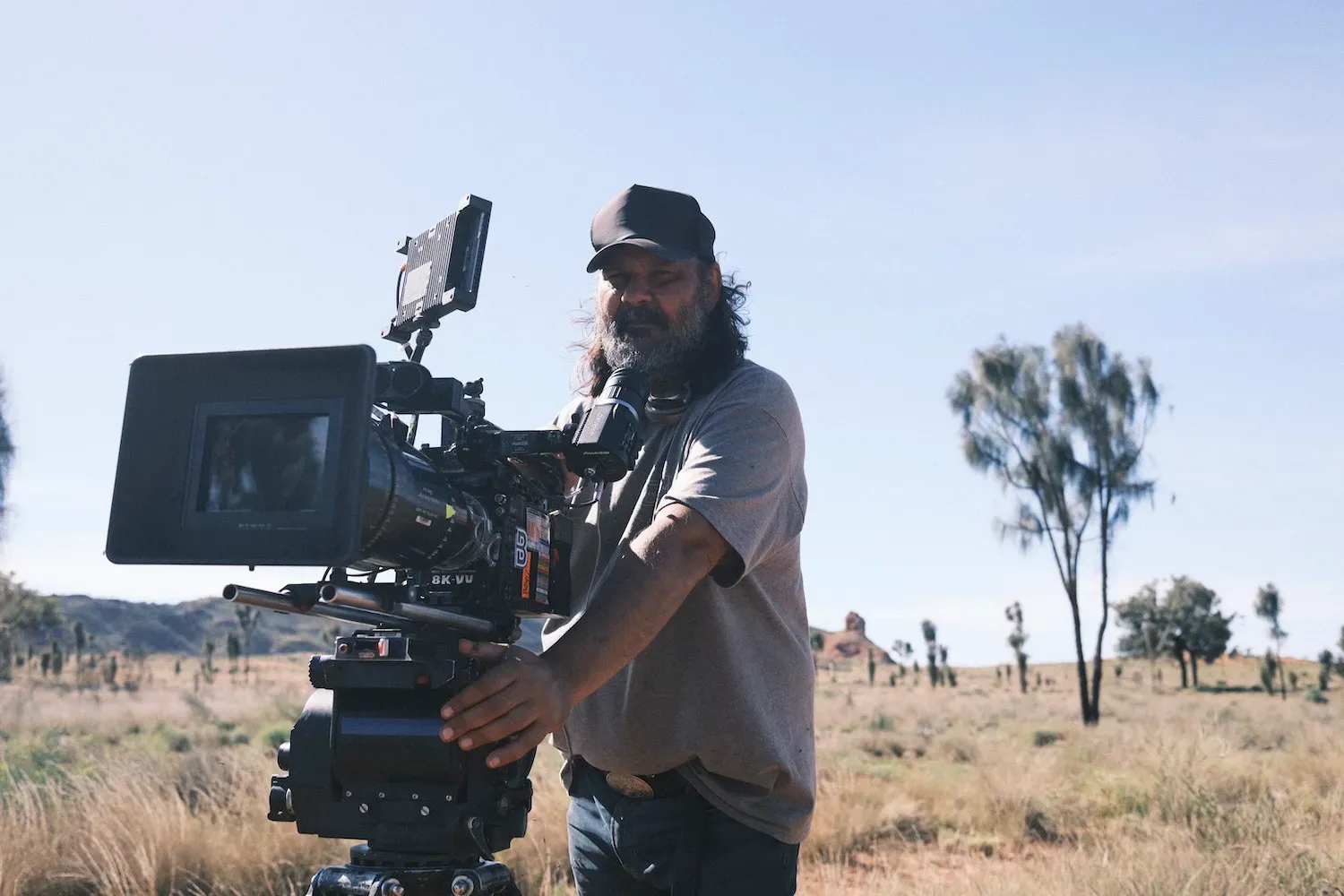
Mailman says that shooting on Country also shaped the performances. Her character Pansy carries much of the film's emotional weight:
"There was very little dialogue, so I wasn't able to go through my own process as an actor. I thought: we'll get out there onto Country. And that's where I'll find it."
Is Wolfram a hopeful film?
During the Q&A, the host prods at Thornton’s claims about an ‘antidote’ to Sweet Country: "This is a brutal film as well…"
Thornton cuts in with characteristic bombast: "It's f*cking Disney! It's Finding Nemo!"
It's hyperbole, but he's got a point. There's a sense of righting-wrongs in Wolfram that sets it apart from Thornton's other work - and he seems aware of what a departure this is:
"A Warwick Thornton film that's hopeful? Jesus. He must be getting old."
When we ask what, specifically, he's hopeful about:
"I'm hopeful that people will see it. That they will actually be entertained and learn something about Indigenous people and their country - our country - that can make them have better decisions later in life."
Wolfram is dark and violent, but it's also an adventure story about solidarity, survival and a kick of genuine feel-good justice. This chance to craft a new story seems to have been a cathartic experience for Thornton:
"We make films that actually empower ourselves foremost. And then hopefully Australia watches and learns a little bit more."
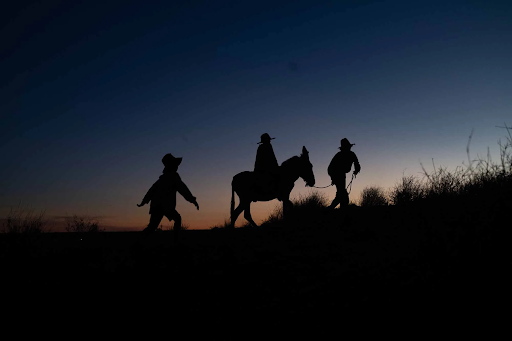
Wolfram hits Australian cinemas on April 30th.
We’ve got discount movie vouchers to see it at Dendy, Event, Village and Hoyts cinemas. Good Tix include a built-in donation to a cause of your choice - if you choose to support Indigenous Equity while you head along and see Wolfram, your movie ticket will go towards The Healing Foundation, Yalari, and the Lowitja Institute.